
Blog January 19, 2026

How Are Cans Made? A Detailed Guide

Precision Manufacturing

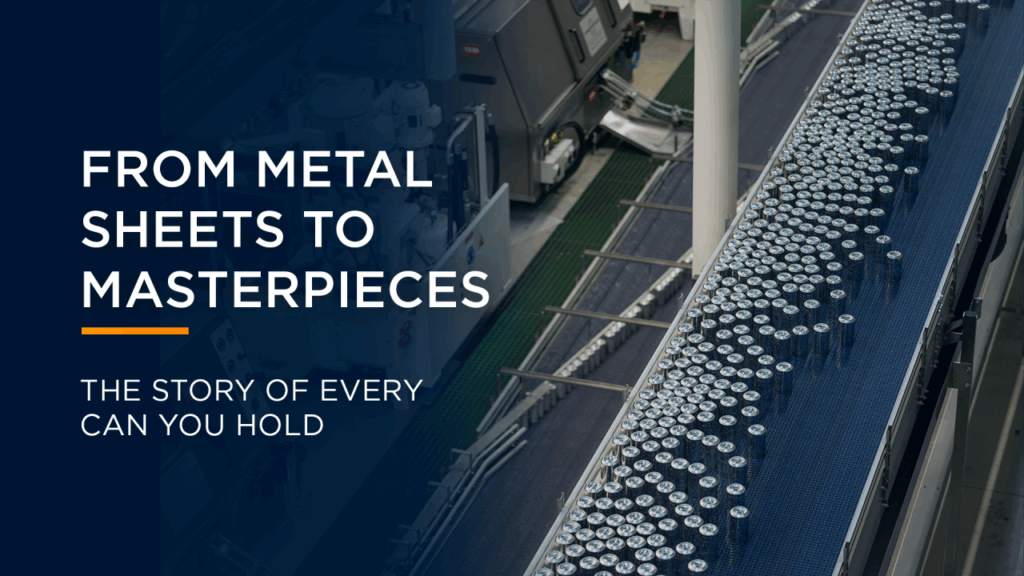
Ever wondered about the journey of your favourite beverage from the manufacturing plant to your hand, all contained in a sleek, shiny can? While we often take these everyday items for granted, the process of making a can is a fascinating tale of precision engineering, advanced machinery, and innovative technology.

Did you know that canmaking begins with a colossal 13-ton roll of aluminium sheeting? This giant roll is capable of producing an astonishing 750,000 cans! The transformation starts as the metal sheet is pressed into circular blanks, which are then shaped into cups. From there, the cups undergo a series of intricate processes, evolving step by step into the finished cans that line our supermarket shelves. 

Join us as we unravel the intricate process of canmaking, step by step, and explore the incredible machines that turn raw materials into the durable, recyclable containers that keep our goods fresh and secure.
 

Step 1

The first stage in forming a can involves creating a cup shape from the metal sheet. This process is done with the help of the Cupping Press – which cuts circular blanks from the metal sheet. The blanks are then drawn into shallow cups using a punch and die mechanism.


Step 2

Next, the Bodymaker takes the preformed shallow cups and stretches them into their final shape. This process involves drawing the cup through a series of rings that elongate the cup and thin its walls, a technique known as “drawing and ironing” (D&I). The precise control of this process ensures that the can body is uniformly thin and has the required height and diameter.
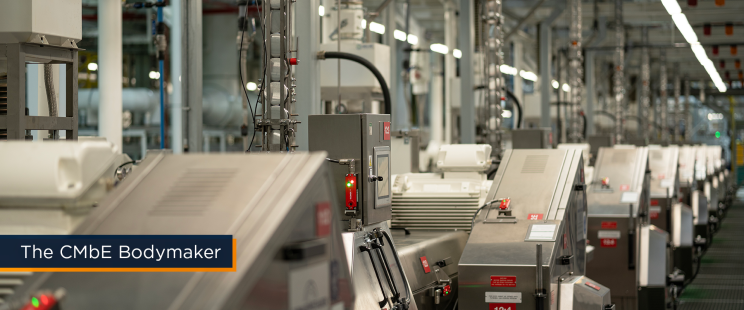
 
bodymaker

Step 3

After the cups have been drawn and ironed, the Trimmer trims the excess material from the top of the can to achieve a consistent height. This step is crucial for ensuring that all cans meet the exact specifications required for further processing and final assembly.
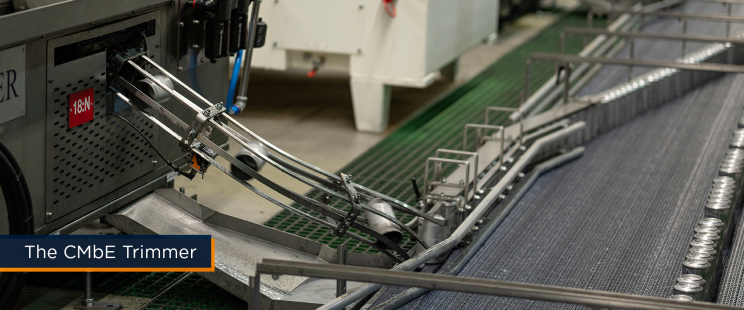
trimmer

Step 4

The newly formed cans then move along to the Washer on a conveyor belt. Here, the cans are washed meticulously under a 6-stage cleaning process with chemicals and deionised water, at a controlled temperature. The cans emerge from the washer all glossy and shiny, ready to enter the drying stage.


Step 5

After washing, the cans are passed through a drying oven to eliminate any remaining moisture. This stage ensures that the cans are completely dry, providing a clean and stable surface for the subsequent process of printing. Proper drying is essential to maintain the integrity of the can and ensure flawless adhesion of coatings applied later.


Step 6

The freshly cleaned cans are decorated and branded by a Decorator. Printing up to 2000 cans per minute, the CMbE reformat™ Decorator uses a rotation printing system with 8 inkers, each operated by its own independent motor, ensuring efficient and precise printing. In the end, a layer of varnish is applied to the cans to protect the ink, following which they make their way to an oven to dry off.


Step 7

The Pin Oven Stage in canmaking is essential for curing the freshly applied ink on the cans. In this stage, cans are securely placed on pins and transported through a heated oven. The controlled heat ensures the ink bonds properly to the can’s surface, enhancing durability and preventing smudging. This process sets the foundation for a long-lasting, high-quality finish, ready for further processing or filling.


Step 8

The cans now enter our state-of-the-art Lacquer Spray Machine that sprays a water-based varnish on the inside of the cans. This varnish acts as a barrier between the drink and the aluminium, protecting the drink from the metal, while also protecting the metal from the drink.
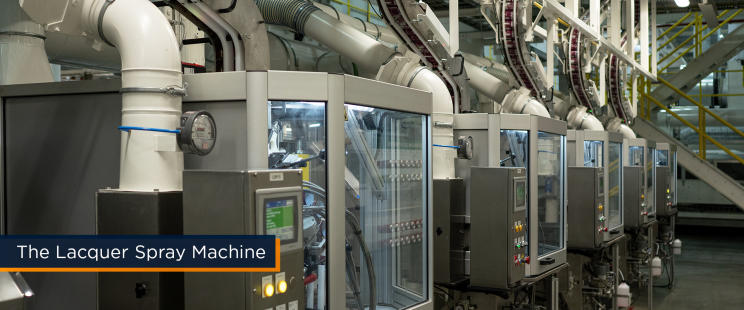
spray machine
 
Step 9

Next, the cans pass through an Internal Bake Oven, which is crucial for curing the internal lacquer coating applied to the cans. Here, cans are subjected to controlled heat to ensure the lacquer adheres properly and creates a durable, protective layer. This coating safeguards the can’s interior against corrosion and preserves the quality of its contents, ensuring the cans are ready for filling and sealing.


Step 10

Finally, the cans meet the Die Necker – a specialised machine tasked with reducing the diameter of the top portion of the can body to prepare it for sealing with an end. This crucial step, known as necking, ensures that the can has the correct dimensions for the end attachment and helps in creating a strong and secure seal. Once this stage is complete the can then travels on to the palletizer and is stored ready for shipping.
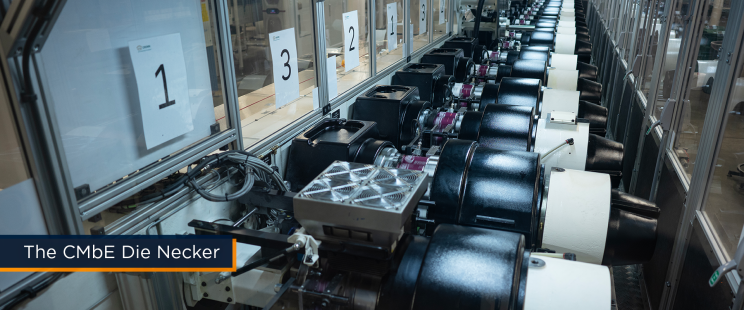
 
die necker

And there it is! The perfect can.

It is important to note that every can goes through a sophisticated vision system that photographs the inside of the can. Any can that doesn’t meet the quality standard is sent back for recycling, along with the leftover sheets of aluminium from Step 1.

The canmaking process is a marvel of modern engineering, involving numerous specialised machines that work in harmony to produce high-quality, reliable packaging. From raw material preparation to the final inspection, each step is crucial in ensuring that the cans we use are not only functional but also safe and aesthetically pleasing.

At CMbE, we are proud to be at the forefront of this industry, providing innovative solutions that enhance efficiency, flexibility, and sustainability in canmaking. Furthermore, our expertise extends to Trackwork & Conveyance, ensuring smooth and efficient transportation of materials throughout the production line. Our state-of-the-art Tool Shops provide precision tools and custom solutions tailored to specific manufacturing needs.

Additionally, through our trusted partners, we offer full turnkey solutions, managing every aspect of the production process from initial design to final implementation. This holistic approach allows us to deliver integrated, seamless solutions that optimise efficiency, enhance productivity, and ensure the highest quality standards in the industry.

Visit our website  www.cmbe.com to learn more.
More News and Updates

Precision Manufacturing

Can-tastic Countries: 10 Countries with Highest Soda Consumption!

Pop the top on curiosity and fizz with anticipation as we delve into the effervescent world of soda consumption! At CMbE, where innovation meets refreshment, we’ve carbonated our curiosity to bring you the bubbliest insights.Join us as we crack open the data vault and unveil the Top 10 Countries with Highest Soda Consumption. Let’s raise a can to the nations making a splash in the fizzy beverage scene! Presenting The Top 10 Nations Quenching Their Thirst for Soda 1: Hungary – 310 L per Capita 2: Belgium – 272 L per Capita 3: Argentina – 155 L per Capita 4: United States – 154 L per Capita 5: Chile – 141 L per Capita 6: Mexico – 137 L per Capita 7: Germany – 120 L per Capita 8: Uruguay – 113 L per Capita 9: United Kingdom – 105 L per Capita 10: Norway – 98 L per Capita The global carbonated beverage market size was estimated at USD 442.07 billion in 2022 and it is predicted to reach around USD 654.37 billion by 2032, expanding at a CAGR of 4% during the forecast period from 2023 to 2032. Soda consumption around the world is attributed to a myriad of factors, each contributing to its effervescent popularity. Its accessibility, affordability and tantalising taste make them accessible to a wide range of consumers, from bustling cities to remote villages.And while you’re still here, enjoy these fun facts about soda!The name “soda” was originally derived from the word “sodium,” which was a common component found in natural spring water.About 1.7 billion servings of Coca-Cola are consumed globally every day.In Mexico’s mountain town of San Cristóbal de las Casas – the locals drink just over two litres of soft drink a day, or around 800 litres a year.In essence, the allure of sodas transcends borders, uniting people in a shared appreciation for its fizzy delight. As we raise our cans to toast the Top 10 soda-loving nations, let’s celebrate the cultural phenomenon that is soda and its enduring popularity around the world! Sources: World Population Review, Precedence Research

READ MORE
Precision Manufacturing

The Man Who Invented Metal Cans: The Legacy of Peter Durand

In the annals of food preservation history, one name stands out for transforming the way we store and transport food: Peter Durand. This British merchant’s innovative thinking and determination led to the creation of the metal can, an invention that has had a profound impact on the food industry and beyond. The Need for a New Preservation MethodThe early 1800s saw an urgent need for reliable food preservation, especially for military purposes. While Nicolas Appert’s method of preserving food in glass jars was groundbreaking, it had limitations due to the fragility and bulkiness of the jars. Peter Durand sought a more durable solution, leading to his invention of the metal can. The Invention of the Metal CanIn 1810, Peter Durand received a patent from King George III for his method of preserving food using tin-coated iron cans. These cans, sealed and heated to destroy bacteria, provided a more durable and practical means of food preservation. The tin coating prevented the iron from reacting with the food, significantly extending its shelf life.Durand’s process created a vacuum seal, ensuring food remained uncontaminated and fresh for long periods. This innovation quickly gained acceptance, particularly within the British Navy, which required reliable food supplies for long voyages. Adoption and EvolutionDurand’s metal cans became widely adopted, and by the mid-19th century, they were mass-produced globally. Innovations such as can openers and improved sealing processes further enhanced their utility. The durability and portability of metal cans made them ideal for both military and commercial use. Peter Durand’s Lasting LegacyPeter Durand’s invention of the metal can revolutionise food storage and transportation, enabling fresh and nutritious meals worldwide. His work laid the foundation for the modern global food industry, facilitating the mass production and distribution of diverse products. Durand’s principles continue to guide contemporary canmaking practices. Celebrating Innovation at CMbEAt CarnaudMetalbox Engineering (CMbE), we honour Nicolas Appert & Peter Durand’s legacy by pushing the boundaries of canmaking technology. Our high-performance, precision-engineered canmaking machinery and end-to-end services apply Durand’s principles with modern efficiency and sophistication.As leaders in the canmaking industry, CMbE is committed to advancing the technology and sustainability of metal cans. By embracing the spirit of innovation that Peter Durand embodied, we strive to make our mark on the world, one can at a time.

READ MORE
Precision Manufacturing

Why CMbE is the Ultimate Choice for Authentic Tooling and Spares

At CMB Engineering (CMbE), we’ve earned our reputation as the go-to provider for authentic tooling and spares in the canmaking industry through dedication, innovation, and an unwavering commitment to quality. But we don’t stop there—our reach and expertise extend across the globe, bolstered by our strategic partnerships with HV Industries and Wissota Tool in the U.S.Here’s why we believe we stand out:💡 Unmatched Expertise: With decades of experience under our belt, we’ve mastered the intricacies of the canmaking process. Our deep knowledge enables us to create tooling solutions that are not only precise but also innovative, keeping us at the forefront of industry advancements. HV Industries and Wissota Tool bring additional layers of expertise, particularly in precision tooling for the U.S. market, ensuring that our solutions meet the highest standards worldwide.🎯 Commitment to Quality: Every tool and spare part we produce undergoes rigorous quality control. We’re proud to say that our commitment to excellence ensures our products meet the highest standards of precision, durability, and performance—and our customers across the globe vouch for it. The contributions from HV Industries and Wissota Tool further enhance our quality promise, offering specialised tooling crafted with American craftsmanship and precision.🔧 Advanced Technology: We leverage state-of-the-art CNC machining and cutting-edge technologies to manufacture our tooling with unparalleled accuracy. This precision is crucial for meeting the demanding requirements of modern canmaking, and with HV Industries and Wissota Tool’s expertise in advanced manufacturing technologies, we deliver tools that are second to none.🌍 Global Support and Service: Our global network, strengthened by our U.S. operations at HV Industries and Wissota Tool, allows us to provide top-notch support to our clients, no matter where they are. From initial consultation to ongoing maintenance, we’re dedicated to offering comprehensive service that helps you get the most out of your tooling. Our presence in the U.S. ensures that we’re always close at hand, providing timely and effective support.🔄 Customization and Flexibility: We understand that every canmaker has unique needs, which is why we offer customised tooling solutions. Our ability to tailor tools to specific requirements sets us apart, ensuring that you get exactly what you need for your production lines. With the added capabilities of HV Industries and Wissota Tool, we can offer even more specialised solutions, particularly for the North American market.At CMB Engineering, we’re not just a provider; we’re your partner in excellence, dedicated to ensuring that your operations run smoothly with the highest quality tools and spares. Whether you’re in Europe, the U.S., or anywhere else in the world, you can count on us to deliver the best in tooling solutions. 🛠️Get in touch to step into the world of quality tooling for your machines.Reach us at sales-USA-Machining@112.196.0.228 or call us:HV: 1-215-322-5500Wissota Tool: (715) 726-2600

READ MORE